
ACL Rehab Timelines That Actually Matter (And When It’s Safe to Run, Cut, and Sprint) - Camberwell
- Emma Glynn
- Dec 10, 2025
- 4 min read

Updated: Apr 24
By Emma Glynn - The Hip & Knee Physio

Many ACL timelines are guesses. Ours aren’t.
When it comes to returning to sport after an ACL injury, time alone doesn’t earn your green light. It’s your strength, movement quality, confidence, and testing outcomes that matter.
At The Hip & Knee Physio in Camberwell, our ACL rehabilitation isn’t based on arbitrary timeframes. It’s based on criteria. Let’s break down what that means and how it helps you return to sport stronger, safer, and more confident.
Criteria-Based > Time-Based Rehab
If you’ve ever heard “you’ll be back at 6 months”, it’s time to rethink. The best available research shows that most athletes aren’t ready for pivoting sports like netball, AFL, or soccer until at least 9–12 months post-op .
That’s because successful return to sport (RTS) depends on more than healing time:
✅ Strength symmetry (especially quadriceps)
✅ Hop test performance
✅ Movement mechanics
✅ Psychological readiness
And this applies whether you’ve had surgery or chosen a non-surgical rehab path.
What Good ACL Rehab Actually Looks Like
There are clear phases in evidence-based ACL rehab. Here’s what to expect:
🗓️ Weeks 0–6:
Settle the knee (pain, swelling)
Regain full extension
Restore normal walking pattern
Early quadriceps activation
🗓️ Weeks 6–12:
Build foundational strength (quads, hamstrings, glutes)
Single-leg balance
Light cardio
🗓️ Months 3–5:
Strength progressions (heavier loads)
Plyometric intro (double then single-leg)
Running program (once criteria are met)
🗓️ Months 5–7:
Acceleration/deceleration
Cutting and turning drills
Small-sided chaos drills
🗓️ Months 7–9+:
Contact preparation
Return-to-training
Sport-specific chaos
RTS testing
At The Hip & Knee Physio, we guide you through each phase with purpose and clarity.
The Tests That Actually Earn Your Green Light
Clearance to return isn’t just a physio’s opinion. You need to pass a structured battery of tests. These include:
✅ Quadriceps Strength
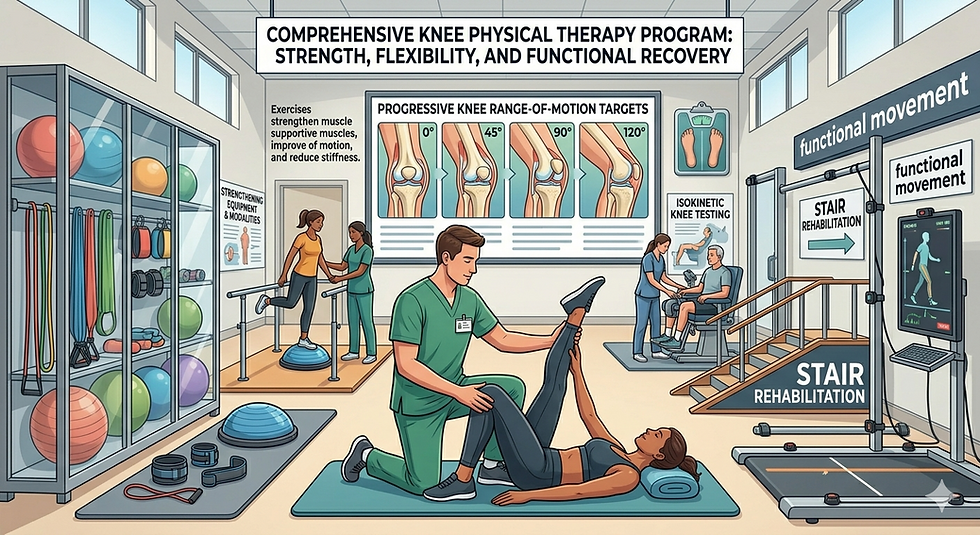
Tested via isometric or isokinetic equipment
Aim: >90–95% limb symmetry index for pivoting sports
✅ Hop Test Battery
Single hop, triple hop, crossover hop, 6m timed hop
Goal: Symmetry and quality, not just distance
✅ Movement Mechanics
Assess landing, deceleration, and agility
Watching for valgus collapse or hesitation
✅ Psychological Readiness
Confidence matters
Fear of reinjury increases actual risk
You must tick off all of the above to safely return. If your current rehab isn’t testing these? You’re not getting the full picture.
Surgery Now or Rehab First?
Not everyone with an ACL tear needs surgery immediately. Recent trials (like the KANON trial) have shown that structured rehab with the option of delayed surgery can yield similar outcomes to early surgery .
When might early surgery be the better choice?
Repeated instability despite rehab
Associated injuries (e.g. meniscus tear needing repair)
Younger athletes in high-demand pivoting sports
We offer guidance on whether surgery suits your goals or whether structured non-operative rehab might be a smart first step.
How We Do ACL Rehab at The Hip & Knee Physio (Camberwell)
Our ACL rehab isn’t generic. Every program is personalised and aligned with your sport, lifestyle, and goals. We use:
Scheduled re-testing to track progress
Clear return-to-play criteria
Coordination with your surgeon or coach
Chaos prep: drills that mimic sport unpredictability
Beyond this, we prep you for cutting, contact, and confidence.
FAQs
How soon can I run?
Usually around 12 weeks but only if strength and control tests are passed.
When can I cut/turn?
Typically 5–6 months in. But again, you need to meet hop, strength, and movement criteria first.
Can I avoid surgery?
Sometimes. It depends on your goals, symptoms, and stability. Rehab-first approaches are increasingly supported for many adults.
Is psychological readiness that important?
Yes. It’s one of the biggest predictors of re-injury. We assess it.
Do I need to see a sports physio for ACL rehab?
If you're aiming for a strong, confident return to sport, yes. A generalist rehab plan won’t cut it.
Next Steps: Book ACL Physio in Camberwell
You don’t need to guess your timelines or settle for outdated rehab.
At The Hip & Knee Physio in Camberwell, we are experienced in ACL recovery done properly. Whether you’re post-op, considering surgery, or unsure what to do next, we can help.
Not sure if you're on the right track?
📥 Download the “Why is my knee still swollen after ACL injury?” PDF
Can't Find What You're Looking For?
Explore more of our most popular services and guides:
Still stuck? Contact us and we’ll point you in the right direction
Disclaimer
The content provided on this website is for general information and educational purposes only. It is not a substitute for professional medical advice, diagnosis, or treatment.
While The Hip and Knee Physio strives to present accurate and up-to-date information, we do not guarantee results or outcomes based on the information provided. Any exercises, strategies, or recommendations featured on this site should not be considered a personalised treatment plan.
Always seek the advice of a qualified healthcare provider before starting any exercise program, particularly if you are experiencing pain, injury, or a pre-existing medical condition.
Use of this website does not create a physiotherapist–patient relationship. The Hip and Knee Physio accepts no responsibility for any injury or loss arising from reliance on or use of this information.
By using this website, you agree to these terms.
References
Grindem H, et al. “Simple decision rules can reduce reinjury risk after ACL reconstruction.” Br J Sports Med. 2016.
Paterno MV, et al. “Criteria-Based Progression Through the Return-to-Sport Phase of Rehabilitation.” JOSPT. 2020.
Logerstedt DS, et al. “Self-reported knee function can identify athletes who fail return-to-activity criteria.” JOSPT. 2012.
Ardern CL, et al. “Return to sport following ACL reconstruction surgery: a systematic review and meta-analysis of the state of play.” Br J Sports Med. 2011.
Frobell RB, et al. “Treatment for acute ACL tear: rehab plus optional delayed surgery vs early surgery.” NEJM. 2010.
Comments