
Understanding Hip Osteoarthritis: Symptoms, Diagnosis, and Management
- Emma Glynn
- Feb 16
- 6 min read

Updated: Mar 27

Introduction to Hip Osteoarthritis
Hip osteoarthritis (OA) is a prevalent joint condition. It occurs when the cartilage in the hip joint gradually deteriorates. This leads to pain, stiffness, and limitations in daily activities like walking, climbing stairs, or getting in and out of chairs. Unlike acute injuries, hip OA develops slowly over time. It is influenced by mechanical and biological factors.
This blog will explain what hip OA is, its typical symptoms, how it is diagnosed, and evidence-based management strategies. Additionally, we will discuss when to consider an assessment with a physiotherapist in Camberwell.
This content is for general information only and is not a substitute for personalised medical advice.
What Is Hip Osteoarthritis?
Osteoarthritis is a degenerative joint condition characterised by:
Breakdown of articular cartilage
Changes in the joint capsule
Bone remodeling and osteophyte formation
In the hip, this process reduces shock absorption and increases friction at the joint surface. It creates a reactive inflammatory environment that contributes to pain and stiffness (Loeser, 2010; Hunter & Bierma-Zeinstra, 2019).
Hip OA may develop with age, prior joint injury (e.g., femoroacetabular impingement), or repetitive mechanical loading that exceeds the joint’s capacity to adapt (Felson, 2013).
Typical Symptoms of Hip OA
People with hip OA often describe:
Groin or lateral hip pain - commonly felt on the side or front of the hip
Stiffness after rest or first thing in the morning
Pain with weight-bearing activities - such as walking, climbing stairs, or going uphill
Reduced hip range of motion - especially in rotation and flexion
Creaking or grinding sensations (crepitus)
Symptoms usually develop gradually and may fluctuate. Many experience good days and bad days, depending on activity levels.
Differentiating Hip OA from Other Hip Pain Sources
Hip pain isn’t always due to OA. It can be confused with:
Hip labral tears - often causing mechanical catching pains
Gluteal tendinopathy - pain on the outer hip
Piriformis syndrome - causing buttock referral pain
Sacroiliac joint dysfunction - pain localised to the posterior pelvis
A careful clinical assessment helps distinguish these presentations (Reiman & Cook, 2014).
Diagnosis: Do I Need Imaging?
Diagnosing hip OA usually begins with a clinical evaluation. Typical findings include activity-related pain, reduced hip rotation, and functional limitations (NICE guideline NG226, 2022).
When Imaging Helps:
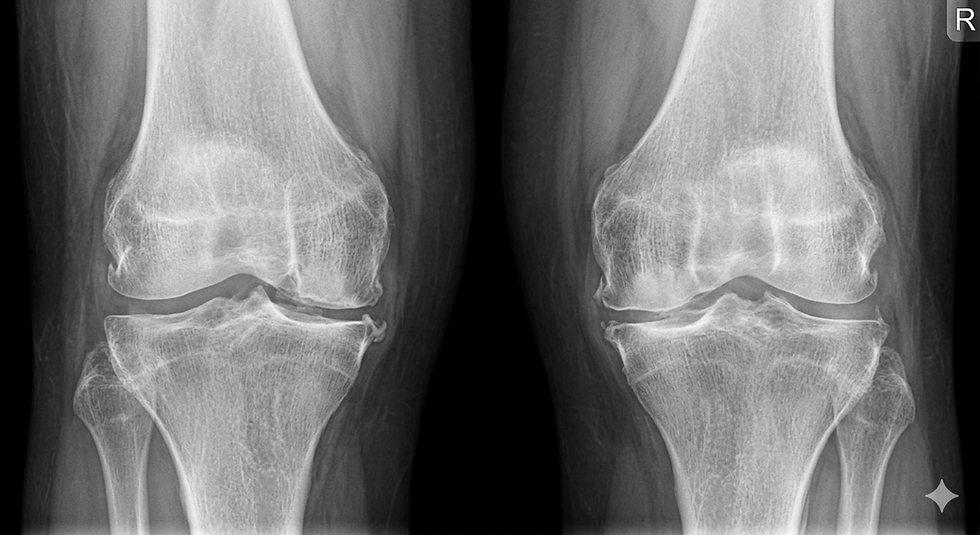
X-rays can confirm joint space narrowing, bone spurs (osteophytes), and subchondral changes.
MRI is rarely needed initially but may be used if symptoms don’t match X-ray findings or if other pathology is suspected.
It’s also important to note that imaging findings don’t always correlate with pain intensity. Many people have X-ray changes without symptoms, while others with significant pain may have only mild imaging changes (Hunter et al., 2014).
What Contributes to Hip OA Pain?
Hip OA pain is driven by a combination of factors:
Mechanical Load: High mechanical stress over time increases wear and tear on joint surfaces.
Muscle Weakness: Weak hip abductors and external rotators lead to altered load distribution across the joint (Bennell et al., 2010).
Inflammation: Low-grade inflammation from joint irritation can sensitise nerves and contribute to pain (Loeser, 2010).
Movement Pattern Changes: Compensatory gait or movement patterns can increase strain on the hip joint and surrounding tissues.
Evidence-Based Management of Hip OA
Multiple clinical practice guidelines support conservative, non-surgical management as the first line for hip OA. This includes education, exercise therapy, and activity modification (NICE NG226, 2022; American College of Rheumatology & Arthritis Foundation, 2019).
1. Exercise Therapy
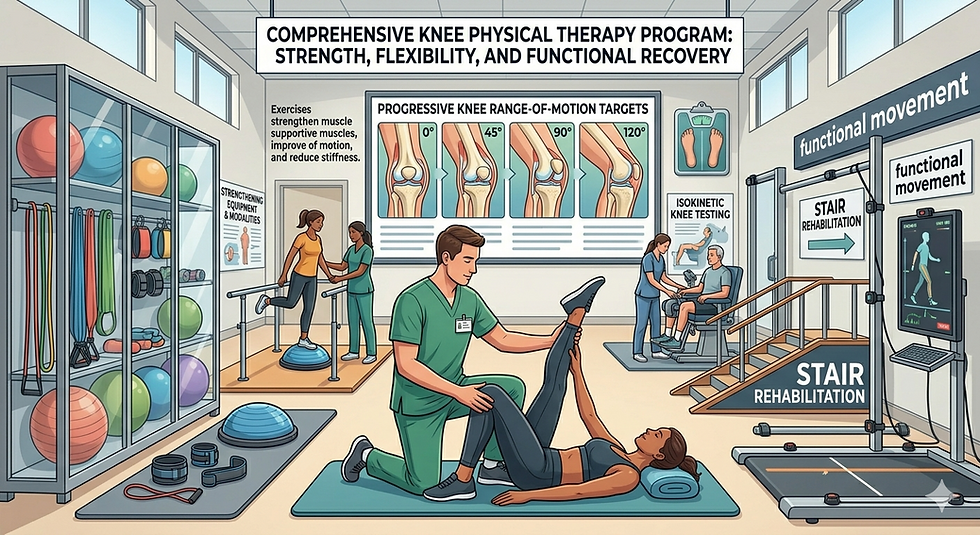
Supported by strong evidence, structured exercise helps reduce pain and improve function. Key components include:
Strengthening hip abductors, extensors, and core muscles
Engaging in aerobic activity to maintain cardiovascular health
Practicing functional movements (e.g., sit-to-stand, step-ups)
A systematic review found that exercise is consistently effective for pain relief and improved mobility in hip OA (Fransen et al., 2015).
2. Load Management
Understanding which movements aggravate symptoms is crucial. Adjusting the volume or intensity of these movements can prevent flares without unnecessary rest. Gradual, consistent loading is more effective than complete avoidance.
3. Manual Therapy
Techniques like joint mobilisation can provide short-term pain relief when combined with exercise (Abbott et al., 2013).
4. Adjuncts and Modality Use
Interventions like acupuncture or TENS may offer symptom relief for some individuals. However, evidence is mixed and should be considered adjunctive to active care (McCarthy et al., 2015).
5. Weight Management & Lifestyle Factors
Excess body weight increases load on the hip joint. Weight loss, when needed, is associated with improved pain and function (Messier et al., 2013).
When Conservative Care Isn’t Enough
If symptoms persist despite optimised conservative care, referral to an orthopaedic surgeon may be considered. Total hip replacement is typically reserved for those with significant pain and a clearly reduced quality of life. However, decision-making is individual and should be shared between the patient and clinician.
What You Can Do This Week
Here are some practical steps to consider:
Track movements that provoke your symptoms.
Maintain regular low-impact activity (walking, cycling, swimming).
Begin hip and core strengthening under guidance.
Avoid prolonged static positions that increase stiffness.
A graduated and consistent approach is key.
FAQs
Can hip OA be reversed?
No, hip OA is degenerative. However, symptoms can be significantly managed with appropriate exercise, education, and activity modification (NICE NG226, 2022).
Is MRI always needed for hip OA?
No, X-rays are usually sufficient. MRI may be used when symptoms don’t match simple radiographic findings or when other pathology is suspected.
Does running worsen hip OA?
Not necessarily. Many people with hip OA can run if load is managed and strength is appropriate. Symptom response should guide progression.
Should I stop all activity if I have hip OA?
No, staying active within tolerance is key. Avoiding unnecessary rest helps preserve strength and function.
Internal Links
Can't Find What You're Looking For?
Explore more of our most popular services and guides:
Disclaimer
The content provided on this website is for general information and educational purposes only. It is not a substitute for professional medical advice, diagnosis, or treatment. While The Hip and Knee Physio strives to present accurate and up-to-date information, we do not guarantee results or outcomes based on the information provided. Any exercises, strategies, or recommendations featured on this site should not be considered a personalised treatment plan. Always seek the advice of a qualified healthcare provider before starting any exercise program, particularly if you are experiencing pain, injury, or a pre-existing medical condition. Use of this website does not create a physiotherapist–patient relationship. The Hip and Knee Physio accepts no responsibility for any injury or loss arising from reliance on or use of this information. By using this website, you agree to these terms.
References
Abbott, J. H., Robertson, M. C., Chapple, C., et al. (2013). Manual therapy, exercise therapy, or both, in addition to usual care, for hip osteoarthritis: A randomised clinical trial. Osteoarthritis and Cartilage, 21(10), 1622–1632. https://doi.org/10.1016/j.joca.2013.08.002
American College of Rheumatology & Arthritis Foundation. (2019). 2019 ACR/AF guideline for the management of osteoarthritis of the hip. Arthritis & Rheumatology, 71(1), 1–33.
Felson, D. T. (2013). Osteoarthritis as a disease of mechanics. Osteoarthritis and Cartilage, 21(1), 10–15. https://doi.org/10.1016/j.joca.2012.10.011
Fransen, M., McConnell, S., Harmer, A. R., et al. (2015). Exercise for osteoarthritis of the hip. Cochrane Database of Systematic Reviews, 4, CD007912.
Hunter, D. J., & Bierma-Zeinstra, S. (2019). Osteoarthritis. Lancet, 393(10182), 1745–1759. https://doi.org/10.1016/S0140-6736(19)30417-930417-9)
Loeser, R. F. (2010). Ageing and osteoarthritis: The role of inflammation in degenerative disease. Nature Reviews Rheumatology, 6(2), 118–125. https://doi.org/10.1038/nrrheum.2010.164
McCarthy, C. J., Kuo, F., Masci, L., et al. (2015). Acupuncture and TENS in hip OA pain: A randomised trial. Pain, 156(10), 2127–2134.
Messier, S. P., Loeser, R. F., Hoover, J. R., et al. (2013). Exercise and dietary weight loss in overweight and obese older adults with knee osteoarthritis. JAMA, 310(12), 1263–1273.
NICE Guideline NG226. (2022). Osteoarthritis: Care and management. National Institute for Health and Care Excellence.

Comments