
Knee Arthritis Exercises: What Helps and What to Modify
- Emma Glynn
- 2 hours ago
- 10 min read

By Emma Glynn - The Hip & Knee Physio
If you have been searching for knee arthritis exercises, there is a good chance you have already been told to “just keep moving”. That advice is usually well meant, and movement is important, but it does not answer the questions that matter.
Which exercises should you start with? How much pain is acceptable? Should you avoid squats? Is walking enough? What happens if the knee flares the next day?
Knee arthritis exercises work best when they are matched to your symptoms, strength, goals and current tolerance, not when they are copied from a generic list.

I am Emma Glynn, an APA Titled Musculoskeletal Physiotherapist in Camberwell. I work with hip and knee conditions, and I regularly assess active adults over 45 who want to stay strong, active and confident with knee osteoarthritis.
For a broader overview of knee OA, you can visit my knee osteoarthritis page. If you are still working out whether your symptoms fit knee arthritis, start with this guide to knee arthritis symptoms and early signs of knee osteoarthritis.
Why knee arthritis exercises matter
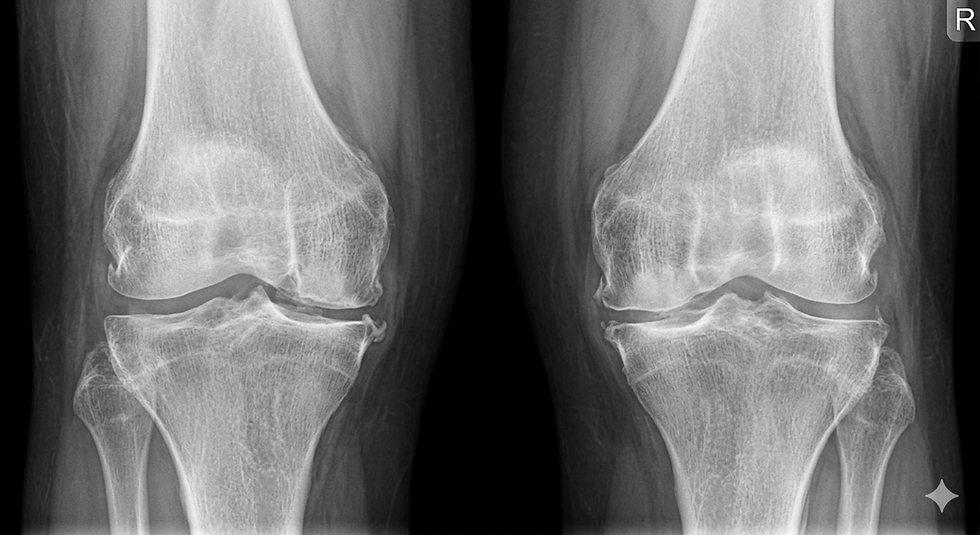
Knee osteoarthritis is a whole-joint condition. It can involve cartilage, bone, joint lining, ligaments, menisci, muscles and the nervous system. It is not simply “worn cartilage”, and it does not mean the knee is too fragile to load.
In fact, exercise is one of the best-supported non-surgical treatments for knee OA. Land-based exercise has been shown to improve pain and physical function in people with knee osteoarthritis (Fransen et al., 2015). Major clinical guidelines consistently recommend exercise as part of first-line care for knee OA (Australian Commission on Safety and Quality in Health Care, 2024; Bannuru et al., 2019; Kolasinski et al., 2020).
The goal is not to punish the joint, but to build strength, movement confidence and load tolerance over time.
Exercise may help by:
Improving quadriceps and hip strength
Supporting walking, stair and sit-to-stand capacity
Improving confidence with movement
Helping manage body weight and cardiovascular health
Reducing the boom-bust cycle of doing too much, then needing to rest for days
Helping you stay involved in activities that matter to you
The right dose matters. If the exercise is too easy, it may not create enough stimulus. If it is too aggressive, it may flare symptoms and make you back away from movement altogether. The sweet spot is individual.
The best knee arthritis exercises are repeatable
People often ask me for the “best” exercise for knee arthritis. The honest answer is that the best exercise is the one that is appropriate for your knee now and can be progressed over time.
A painful, irritable knee may need a very different starting point from a knee that is mildly stiff but otherwise tolerates load well.
The best knee arthritis exercises are not always the hardest exercises; they are the ones you can repeat consistently without flaring the knee.
A good starting program usually considers:
Your pain level during exercise
Your symptoms later that day and the next morning
Your current strength
Your walking, stair and sit-to-stand tolerance
Whether the knee swells after activity
Your goals, such as walking, running, golf, hiking, gym or travel
Your access to equipment
This is where generic advice falls apart. Two people can both have knee OA and need completely different starting points.
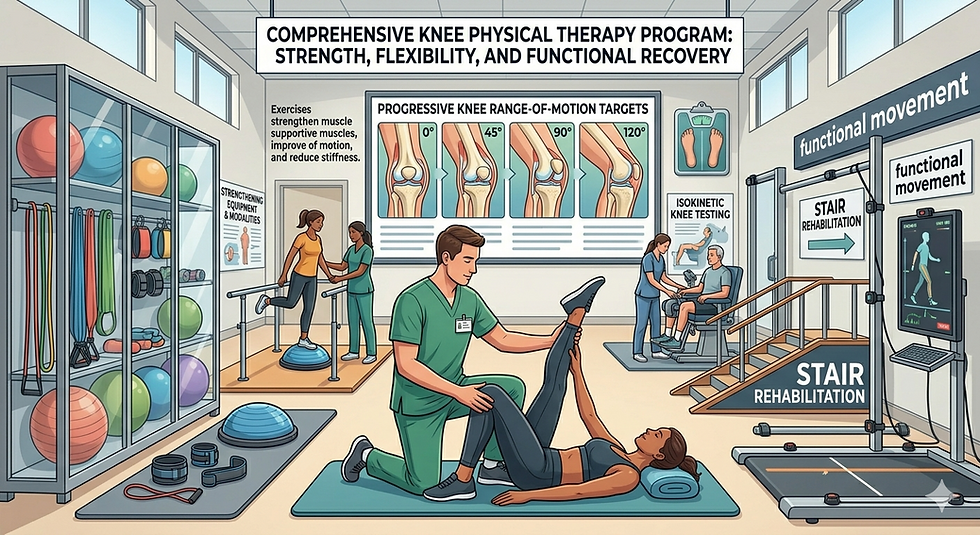
Strength exercises that often help knee arthritis
Strength training is usually central to knee OA management. The quadriceps are especially important because they help control the knee during walking, stairs, squatting and getting out of chairs. Quadriceps weakness has been associated with knee pain and functional limitations in people with knee OA (Slemenda et al., 1997).
The hip muscles also matter. Stronger gluteal and hip muscles can help with lower limb control during walking, stairs and single-leg tasks.
Strength work should challenge the muscles around the knee without repeatedly provoking a flare.
Common starting options may include:
Sit-to-stand from a raised chair: This is practical, functional and easy to modify by changing chair height.
Wall sit or supported squat hold: This can load the quadriceps without needing a large range of knee movement.
Seated knee extension: This can target the quadriceps in a controlled way, especially when range and load are adjusted.
Step-ups to a low step: This helps prepare for stairs and can be progressed gradually.
Glute bridges: This loads the hip extensors and can be useful when deeper knee bending is not well tolerated.
Side-lying or standing hip abduction: This can help target hip abductor strength.
Calf raises: These support walking capacity and lower limb strength.
None of these are mandatory. The right exercise depends on the person. A sit-to-stand may be perfect for one knee and too provocative for another if the chair is too low or the volume is too high.
Low-impact cardio is usually useful
Cardiovascular exercise matters for knee OA. It supports general health, weight management where relevant, mood, sleep and overall activity tolerance. It can also help people stay active while strength is being rebuilt.
Low-impact cardio can be a useful way to keep moving without asking the knee to absorb high impact every session.
Options may include:
Walking: Often appropriate, but distance, pace, hills and surfaces may need adjusting.
Cycling: Useful for many people because it allows repeated knee movement with lower impact.
Swimming or water walking: Helpful during flare periods or when land-based activity is limited.
Elliptical or cross-trainer: Useful for some people if tolerated.
Rowing machine: Sometimes helpful, but the knee bend may need modifying if symptoms are irritable.
Walking is not automatically good or bad. It is about dose. A flat 15-minute walk may be helpful. A hilly 90-minute walk during a flare may be too much.
If you are wondering about running specifically, I have written more here: Can you keep running with knee osteoarthritis?.
Mobility exercises can help, but do not force the knee
Knee OA often comes with stiffness. Gentle mobility work can be useful, especially if you feel stiff after sitting or first thing in the morning.
The aim is not to force the knee into painful positions. It is to keep comfortable movement available and help the knee warm up before harder tasks.
Mobility work should make the knee feel more prepared for movement, not more irritated afterwards.
Options may include:
Gentle knee bends within a comfortable range
Heel slides
Seated knee flexion and extension
Stationary cycling with low resistance
Calf, hamstring or quadriceps mobility work if relevant
Gentle warm-up before stairs, walking or gym work
Stretching can feel good, but it is not the main treatment for knee OA. If stretching is the only thing in the plan, the knee is probably missing the strength and load-tolerance work it needs.
Exercises to modify or avoid during a flare
I do not like blanket lists of exercises that people with knee arthritis must never do. That kind of advice can make people fearful, and it is often inaccurate. Many movements can be useful at the right time, with the right dose and range.
That said, some exercises are common flare triggers when the knee is irritable.
During a flare, the goal is usually to modify the range, load, speed or volume rather than ban the movement forever.
Exercises that may need modifying include:
Deep squats: Try reducing depth, using a box or chair target, or holding onto support.
Deep lunges: Try split squats with a shorter range, or swap temporarily to step-ups.
High-impact classes: Jump squats, burpees, box jumps and repeated hopping may need to wait until the knee is ready.
Running volume: Sudden increases in distance, speed, hills or downhill running can flare symptoms.
Heavy leg press in deep flexion: Reducing depth or load may make it more tolerable.
Cycling with the seat too low: A low seat can increase knee compression by forcing deeper knee bend.
Long hill walks during a flare: Flat walking may be a better temporary option.
The movement is not always the villain. The problem is often too much, too soon, too deep, too heavy, or too frequent.
If you struggle with repeated flare-ups, this article on knee arthritis after 45 and flare patterns may help you understand why symptoms can settle and then return.
How much pain is acceptable during knee arthritis exercises?
This is one of the most useful questions to ask. Many people with knee OA either avoid pain completely or push through too much. Neither extreme is ideal.
A small amount of discomfort during exercise can be acceptable for some people, especially if it settles quickly and does not worsen the next day. But pain that changes your walking, causes swelling, or hangs around for days usually means the dose needs adjusting.
A good exercise dose should feel manageable during the session and should not leave the knee clearly worse over the next 24 hours.
As a general guide, you may need to reduce load if:
Pain climbs sharply during exercise
You limp during or after the session
The knee becomes more swollen
Symptoms are clearly worse the next morning
Pain lasts more than 24 hours
You lose confidence in stairs or walking after training
That does not always mean the exercise was wrong. It may mean the range, load, sets, reps, speed or recovery time needs changing.
How often should you exercise with knee arthritis?
Most people with knee OA do well with a combination of strength training and regular physical activity. Guidelines commonly recommend exercise as a core part of OA management, but the exact dose needs to be individualised.
For many people, a practical starting point is strength work two to three times per week, with lower-intensity physical activity on most days if tolerated.
Consistency matters more than smashing one heroic session and needing three days to recover.
A simple week might include:
Two strength sessions
Three to five short walks or bike sessions
Gentle mobility on stiff mornings
One or two rest or lower-load days
Adjustments during flare periods
If your knee is highly reactive, you may need smaller, more frequent doses. If your knee is stable and you are already active, the program may need more challenge.
What if walking is your only exercise?
Walking is a good starting point for many people, but it may not be enough on its own. Walking helps maintain activity and cardiovascular fitness, but it does not always provide enough targeted strengthening for the quadriceps, glutes and calves.
Walking is useful, but most knees with OA also benefit from some form of progressive strength training.
If walking is flaring your knee, you may not need to stop completely. You may need to change:
Distance
Pace
Hills
Surface
Footwear
Frequency
Recovery between walks
For example, replacing one long walk with two shorter walks may be better tolerated. Swapping hills for flat ground during a flare can also help.
When knee arthritis exercises should be supervised
Some people can safely start with simple self-management, especially when symptoms are mild and predictable. Others need a clearer assessment and a more specific plan.
If exercise keeps flaring your knee, the issue is probably not motivation; it is usually the dose, diagnosis or starting point.
It is worth getting help if:
You are unsure whether your pain is actually knee OA
Your knee swells after exercise
You keep flaring after walks, stairs or gym sessions
You have been told your knee is “bone on bone”
You are worried about making things worse
You have stopped activities you care about
You want to keep running, hiking, golfing or lifting
Surgery has been mentioned and you want to understand your options
A good assessment should help identify what your knee can currently tolerate, which exercises are appropriate, and what needs to change if symptoms flare.
What a sensible knee arthritis exercise plan looks like
A useful plan is not just a list of exercises. It should have a starting point, a reason for each exercise, and a way to progress.
The plan should help you build capacity, not just survive today’s symptoms.
A sensible plan usually includes:
A clear diagnosis and baseline assessment
A pain and swelling response guide
Strength exercises matched to your current level
Cardio options that suit your knee and lifestyle
Flare-up rules
Progressions for load, range or volume
A pathway back to the activities that matter to you
For some people, that means getting back to longer walks. For others, it means gym training, golf, tennis, hiking, travel or running.
If surgery has already been discussed, this article may also help: Can physiotherapy delay knee surgery?.
When to book an in-person assessment
If you have knee arthritis and you are not sure what exercises are safe, an assessment can give you a clearer starting point. You do not need to wait until the knee is unbearable. It is often easier to build a plan before your life has shrunk around the pain.
The best knee arthritis exercises are the ones that match your knee, your goals and your current capacity.
You have knee pain or stiffness that keeps returning
Stairs, hills, walking or gym work are becoming harder
You are unsure whether to rest or exercise
You have been given generic advice but no clear plan
You are avoiding activities because you are worried about your knee
You want to stay active with knee OA
If you are based in Melbourne’s inner east, including Camberwell, Hawthorn, Kew, Canterbury, Surrey Hills, Glen Iris or nearby, you can book an in-person knee assessment with me at The Hip and Knee Physio. I will assess your knee, explain what I think is contributing to your symptoms, and help you start with exercises that fit your current tolerance.
Emma
References
Australian Commission on Safety and Quality in Health Care. (2024). Osteoarthritis of the knee clinical care standard. ACSQHC. https://www.safetyandquality.gov.au/standards/clinical-care-standards/osteoarthritis-knee-clinical-care-standard
Bannuru, R. R., Osani, M. C., Vaysbrot, E. E., Arden, N. K., Bennell, K., Bierma-Zeinstra, S. M. A., Kraus, V. B., Lohmander, L. S., Abbott, J. H., Bhandari, M., Blanco, F. J., Espinosa, R., Haugen, I. K., Lin, J., Mandl, L. A., Moilanen, E., Nakamura, N., Snyder-Mackler, L., Trojian, T., … McAlindon, T. E. (2019). OARSI guidelines for the non-surgical management of knee, hip, and polyarticular osteoarthritis. Osteoarthritis and Cartilage, 27(11), 1578–1589. https://doi.org/10.1016/j.joca.2019.06.011
Fransen, M., McConnell, S., Harmer, A. R., Van der Esch, M., Simic, M., & Bennell, K. L. (2015). Exercise for osteoarthritis of the knee: A Cochrane systematic review. British Journal of Sports Medicine, 49(24), 1554–1557. https://doi.org/10.1136/bjsports-2015-095424
Kolasinski, S. L., Neogi, T., Hochberg, M. C., Oatis, C., Guyatt, G., Block, J., Callahan, L., Copenhaver, C., Dodge, C., Felson, D., Gellar, K., Harvey, W. F., Hawker, G., Herzig, E., Kwoh, C. K., Nelson, A. E., Samuels, J., Scanzello, C., White, D., … Reston, J. (2020). 2019
American College of Rheumatology/Arthritis Foundation guideline for the management of osteoarthritis of the hand, hip, and knee. Arthritis Care & Research, 72(2), 149–162. https://doi.org/10.1002/acr.24131
Slemenda, C., Brandt, K. D., Heilman, D. K., Mazzuca, S., Braunstein, E. M., Katz, B. P., & Wolinsky, F. D. (1997). Quadriceps weakness and osteoarthritis of the knee. Annals of Internal Medicine, 127(2), 97–104. https://doi.org/10.7326/0003-4819-127-2-199707150-00001
Medical disclaimer
This blog is general educational information only and is not a substitute for individual medical advice, diagnosis or treatment. If you have severe or worsening knee pain, a hot or rapidly swollen joint, fever, recent trauma, inability to weight-bear, significant locking, new neurological symptoms, calf swelling, shortness of breath, or symptoms that concern you, please seek medical review promptly.

Comments